

The Samurai’s Secret: How the Japanese Tea Ceremony Trained the Warrior Mind
When most travelers imagine a samurai, they picture swift swordplay and fierce battles. The image of these same warriors kneeling quietly in a tea room, delicately whisking powdered green tea, seems contradictory. Yet, in feudal Japan, the greatest samurai were often the most devoted practitioners of chanoyu—the Way of Tea.
Samurai practiced the tea ceremony not as a "soft" hobby, but as a core part of their warrior mindset. It was a method to manage the immense pressures of their station and embody the virtues of bushidō (the way of the warrior). At Japan Educational Travel, we believe that understanding this "quiet side" of the samurai offers a profound window into the Japanese soul, revealing that the sword and the whisk were two sides of the same coin.
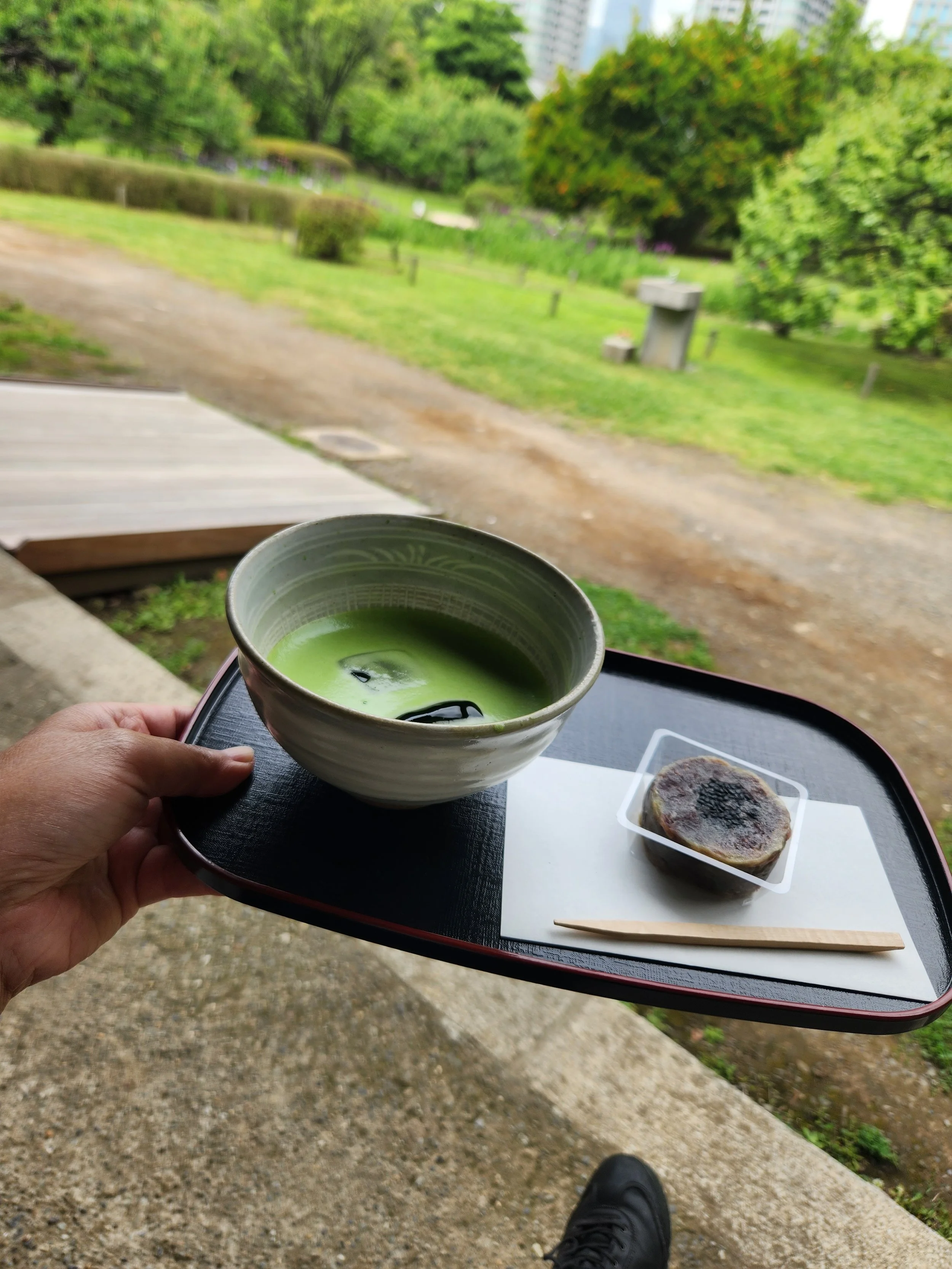
A bowl of freshly whisked matcha and wagashi (Japanese traditional dessert) at Hamarikyu Garden in Tokyo
Bushidō in a Cup: The Values of the Tea Room
The tea ceremony serves as a physical manifestation of the values a samurai carried onto the battlefield. By streamlining their movements in the tea room, they sharpened their effectiveness in life.
Discipline and Self-Control (Ji and Rei)
The tea ceremony demands absolute precision. From the specific way a silk cloth (fukusa) is folded to the exact angle of the bamboo scoop (chashaku), there is no room for carelessness.
For a samurai, this was mental conditioning. A warrior who could control every muscle movement while whisking tea could maintain a steady sword hand in the heat of combat. This practice reinforced ji (self-control) and rei (respect through proper form)—both essential virtues of the bushidō code. To fumbled the tea bowl was to show a lapse in the very focus required to survive a duel.
Tranquility Under Pressure (Heijōshin)
Heijōshin translates to "presence of mind"—the ability to remain grounded whether drinking tea or facing mortality. Historical accounts describe legendary warlords like Oda Nobunaga performing the tea ceremony the night before crucial battles. This wasn't escapism; it was a ritual to access the calm center required for strategic clarity. In the tea room, a samurai practiced maintaining perfect composure while performing intricate tasks, training the nervous system to remain steady under extreme pressure.
Simplicity and Directness (Kanso)
Bushidō valued directness; the most effective sword strike was often the simplest. The aesthetic of kanso (simplicity) reinforces this. A traditional tea room contains only essentials: tatami mats, a single scroll, and tea utensils. This aesthetic trained samurai to cut away excess thought and emotion. A mind uncluttered by distractions is a mind that reacts swiftly.
Bunbu Ryōdō: The Balance of Pen and Sword
Samurai culture emphasized the concept of bunbu ryōdō—the dual path of the cultural and martial arts. A complete warrior was expected to be equally versed in combat and the refined arts.
The Daily Practice
A high-ranking samurai’s day was a masterclass in balance. Morning hours were dedicated to bu (martial training) like swordsmanship and archery. The afternoons were reserved for bun (cultural arts) like calligraphy, poetry, or tea. Each discipline reinforced the other. The breath control learned during a tea ceremony translated directly to the steady draw of a bow; the patience required for a perfect pour prepared the mind for long strategic councils.
Active Stress Management
Samurai lived under constant psychological strain—serving lords whose favor could shift and navigating lethal political intrigue. The tea ceremony provided a structured sanctuary. Because the ritual requires complete focus on the immediate sensory experience—the sound of boiling water, the aroma of the matcha—it forces the practitioner into the present moment. This was active stress management through disciplined focus, training the mind to shift from anxiety to presence on command.
Fueling the Warrior: The Samurai Diet
The discipline of the tea room extended to the samurai’s kitchen. They viewed food as a functional tool for endurance rather than mere pleasure.
The Energy Foundation: A diet centered on rice provided stable, complex carbohydrates for sustained energy.
The Daily Reset: Miso soup provided essential probiotics and amino acids to keep the warrior’s immune system strong.
Strategic Hydration: Different teas served specific purposes. Matcha provided high-intensity focus before a battle, while roasted Hojicha served as a low-caffeine recovery drink in the evening to promote circulation and relaxation.
Experience the Samurai Path Today
When you participate in a tea ceremony today, you are engaging in the same mental training that sustained Japan’s legendary warriors. From the structured silence to the bitter, earthy taste of the matcha, every element is designed to pull you into a state of "calm alertness."
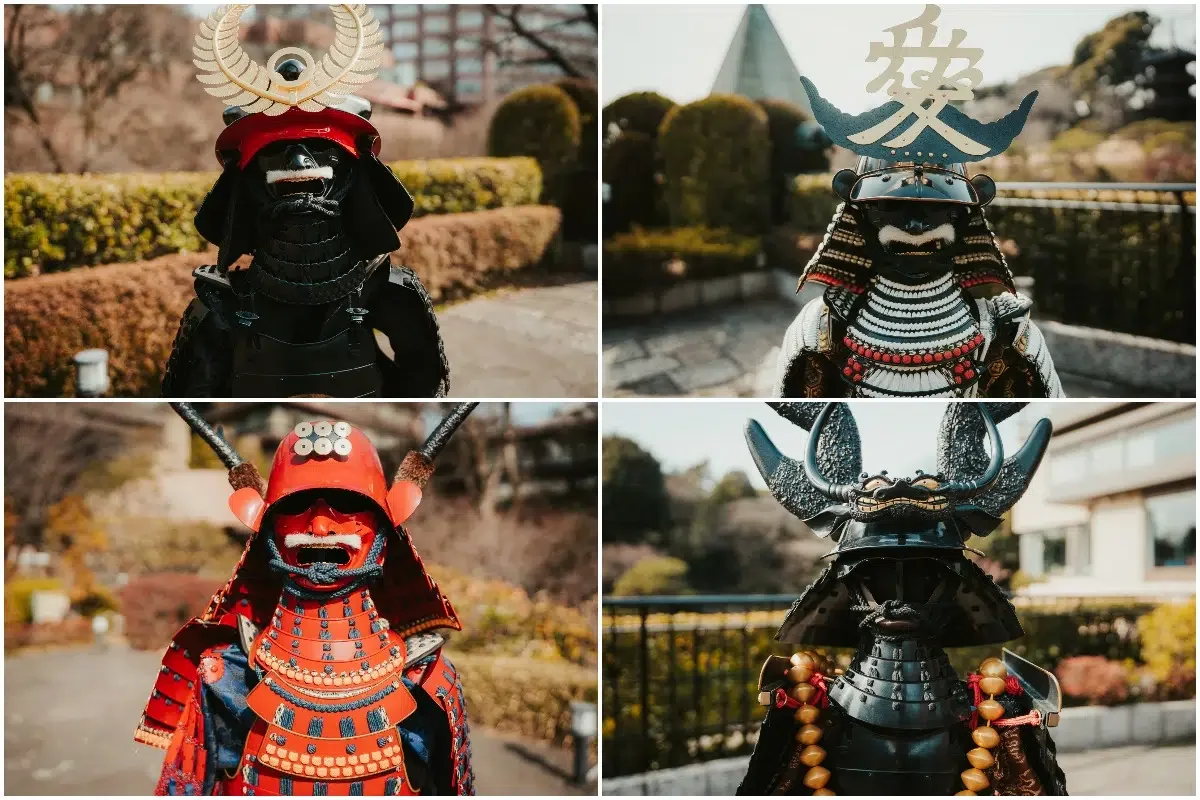
Four iconic historical figures from Japan's Sengoku (Warring States) period: Top Left: Tokugawa Ieyasu, Top Right: Naoe Kanetsugu, Bottom Left: Sanada Yukimura (Sanada Nobushige), Bottom Right: Honda Tadakatsu
Where to Practice in Tokyo
If you are visiting the Tokyo area, we recommend these immersive experiences:
Samurai Ninja Museum (Asakusa): Offers "Samurai & Tea" sessions that explain the psychology behind the ritual.
Maikoya (Asakusa/Shibuya): Provides the opportunity to wear traditional attire while learning the precise movements of the ceremony.
TokudAw original treasure session: Learn about the world of legendary Japanese warriors. In our signature session, you won't just hold a sword,you'll understand it.
The Mindset: Uncover the core tenets of the warrior code (Bushido), exploring the philosophy, discipline, and honor that guided samurai and ninja throughout history.
The Method: Experience the physical mechanics firsthand. Learn the biomechanics and science behind fundamental sword-fighting strikes—dissecting how balance, center of gravity, and kinetic energy power every movement.
How to Approach Your Ceremony
To get the most out of your experience, approach it with a samurai mindset. Arrive early to transition your mind away from the bustle of travel. Leave your phone behind; partial attention is the enemy of discipline. Notice the silence, and observe how your body reacts to the slow, deliberate pace.
Discover the Heart of Japan with Us
The tea ceremony teaches us that true strength comes from a quiet mind. We may not face literal battles today, but we all face distraction and pressure. The discipline cultivated in tea addresses these modern challenges directly.
Would you like us to arrange a private driver to take you to an authentic, hidden tea house in Tokyo or Kamakura for your own samurai-inspired experience? Contact Japan Educational Travel today!